Back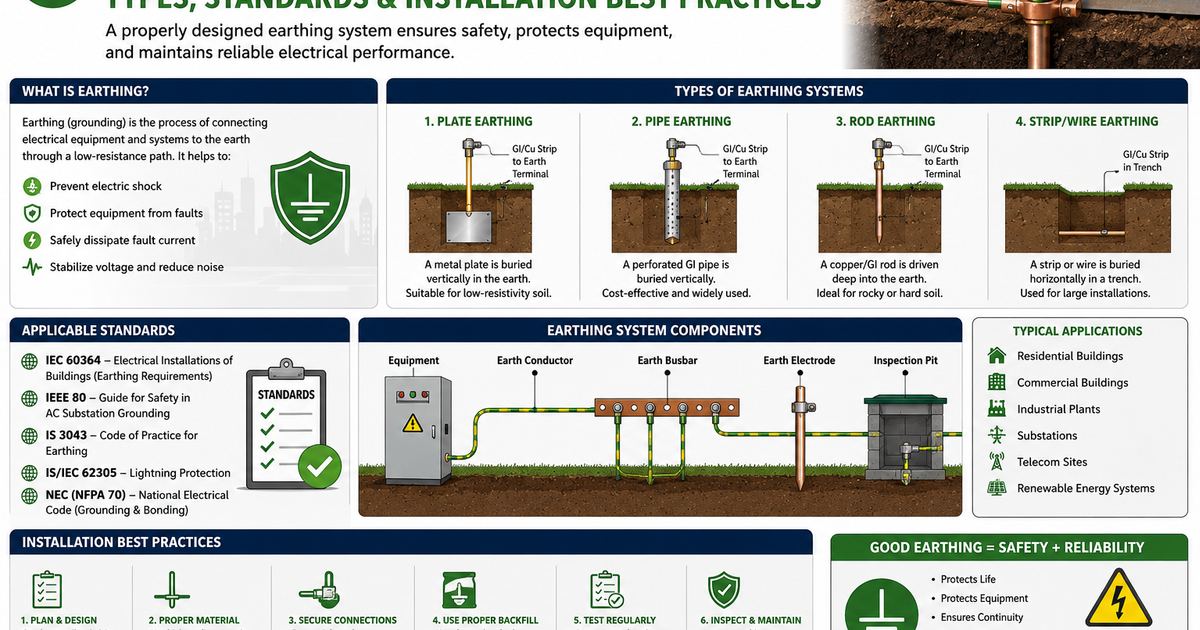
Earthing & Lightning Protection
Earthing Systems Explained: Types, Standards & Installation Best Practices
April 20, 2025
A properly designed earthing system is the foundation of electrical safety. This guide covers plate, pipe, strip, and chemical earthing — and when to use each.
What Is Earthing and Why Is It Critical?
Electrical earthing connects exposed conductive parts of equipment to the earth, providing a low-resistance fault current path. This ensures protective devices operate quickly during faults, preventing electric shock, equipment damage, and fire.
Types of Earthing Systems
- Plate Earthing: A copper or GI plate buried vertically. Reliable and widely used for domestic and commercial installations.
- Pipe Earthing: A GI pipe driven vertically into the ground. Low cost and easy to maintain — most common type in India.
- Strip / Wire Earthing: Bare copper or GI strip laid in trenches. Used for large industrial plants and substations.
- Chemical / Maintenance-Free Earthing: A back-filled electrode with conductive compound. Ideal for rocky soil, high-resistance ground, and telecom towers.
Key Standards: IS 3043
IS 3043 (Code of Practice for Earthing) governs all earthing installations in India. Key requirements: earth resistance ≤ 1Ω for power systems, ≤ 5Ω for general installations, ≤ 10Ω for lightning protection. Always test after installation with a digital earth resistance tester.
Installation Best Practices
- Bury electrodes below the permanent moisture level — typically 2–3 metres.
- Use bentonite or conductive compound backfill to maintain soil moisture and reduce resistance.
- Install inspection chambers to allow periodic resistance testing.
- Bond all earth electrodes together into a single earthing network.
- Re-test earth resistance annually or after any soil disturbance.
Need Help with Your Earthing System?
TesniQ supplies chemical earthing electrodes, GI pipes, copper bonding conductors, and complete earthing kits. Contact us for site-specific recommendations.
earthinggroundingelectrical safetyIS 3043lightning protection